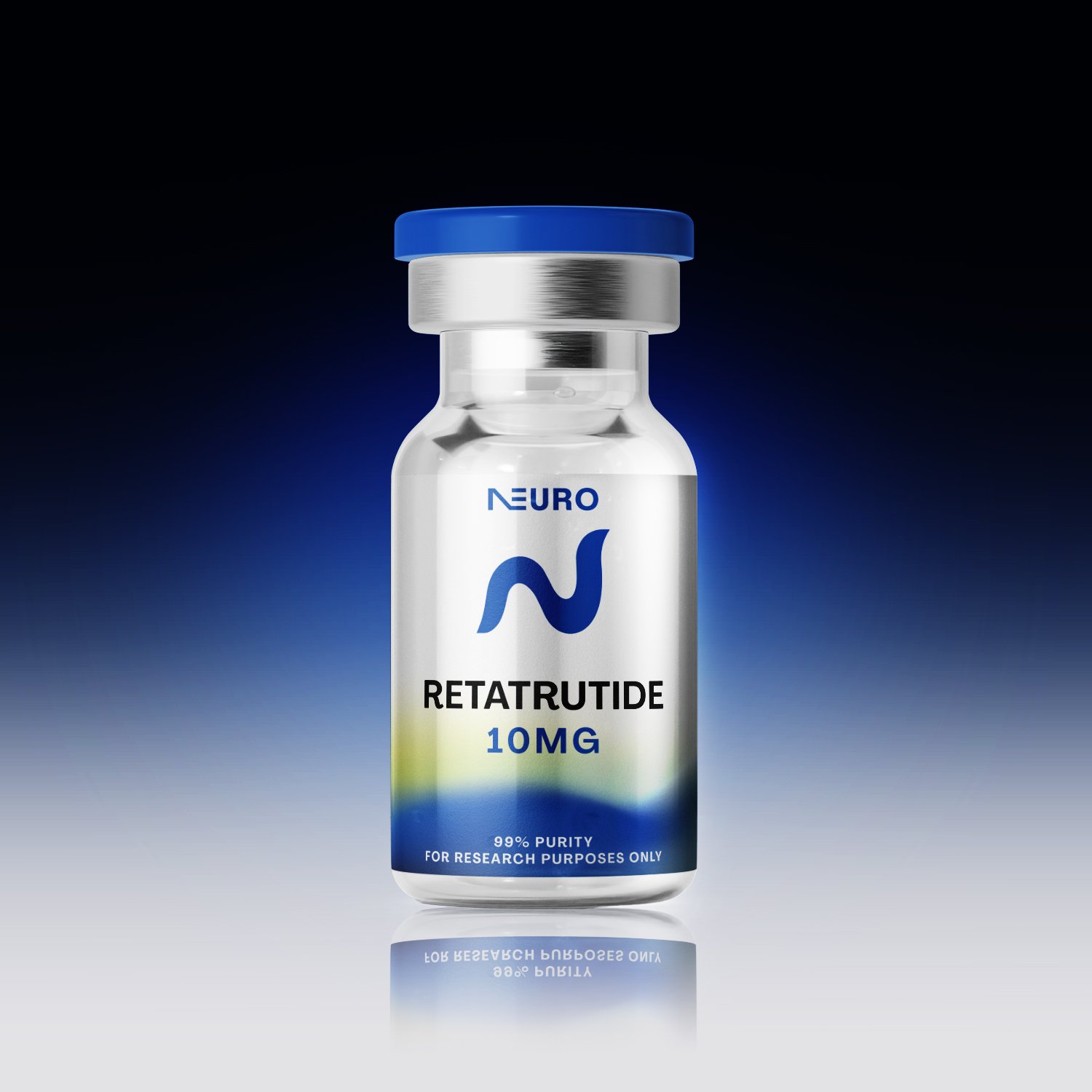
Retatrutide – Product Details
Retatrutide, also known as LY3437943, is a metabolic research peptide originally developed by Eli Lilly. By simultaneously activating the GLP-1, GIP, and Glucagon receptors, this compound is currently the subject of intensive study regarding its potential impact on metabolic efficiency and energy regulation.
As of 2026, Retatrutide is being studied in phase 3 clinical trials as part of the TRIUMPH clinical trial program. This program aims to evaluate the safety and efficacy of investigational doses of retatrutide for chronic weight management in adults with obesity or overweight with at least one weight-related comorbidity.
Retatrutide has not been approved by the FDA for human consumptionand is strictly available for laboratory research purposes.
What is Retatrutide?
Retatrutide is a synthetic peptide acting as an agonist of GLP-1, GIP, and glucagon receptors.
Researchers studying incretin biology have long investigated the effects of GLP-1 and GIP receptor activity. Retatrutide expands on this concept by incorporating glucagon receptor activity into the molecule’s design. This additional receptor interaction has created widespread interest among scientists studying metabolic regulation and energy balance.
Because of the interplay among these three key receptor pathways, Reta plays an important role in metabolic research.
The Phase 3 trials evaluating retatrutide for obesity and weight management are collectively known as the TRIUMPH program. Eli Lilly has already begun releasing highly successful topline results for several of these pivotal trials in mid-2026, including TRIUMPH-1, TRIUMPH-2, and TRIUMPH-3.
You can now buy retatrutide online at Neuro Peptides at $110 only.
Retatrutide Peptide Structure and Properties
Retatrutide is a synthetic peptide consisting of 39 amino acids and is designed to enhance stability and receptor activity. While its complete amino acid sequence has not been publicly disclosed, the molecule incorporates structural modifications intended to improve resistance to enzymatic degradation and prolong receptor interaction.
- Molecular Formula: Not publicly available
- Molecular Weight: Approximately 4,000–5,000 Da
- CAS/PubChem ID: Not assigned (investigational compound)
- Form: Lyophilized acetate salt
Its unique design allows Retatrutide to interact with multiple metabolic receptors, making it a valuable compound for ongoing laboratory research into incretin and glucagon signaling pathways.
How Does Retatrutide Work in A Research Setting?
One of the defining characteristics of Retatrutide is its classification as a triple agonist. Scientists use the term ‘triple agonist’ to describe how the compound engages in three separate receptor systems.
1. GLP-1 Receptor Activity
GLP-1 receptors are a cornerstone in peptide development and are widely studied in metabolic research. Researchers continue to investigate how GLP-1 signalling can contribute to metabolic regulation, nutrient processing, gut hormone signalling, and glucose metabolism.
2. GIP Receptor Activity
Glucose-dependent insulinotropic polypeptide (GIP) is another hormone that plays a key role in incretin research. Researchers study how GIP signalling interacts with other metabolic hormones and physiological systems and how it may aid in regulating metabolic activities.
3. Glucagon Receptor Activity
The glucagon receptor component distinguishes Retatrutide from many earlier investigational compounds. Researchers continue evaluating how glucagon receptor activity may contribute to overall metabolic signalling networks.
Together, these three receptor interactions have positioned Retatrutide as one of the most innovative compounds currently under investigation.
Retatrutide Research Applications
1) Obesity Research Protocols and Weight Reduction
The phase 2 obesity trial published in The New England Journal of Medicine is widely referenced as a key indicator of Retatrutide’s potential. The study reported substantial reductions in body weight over a period of 48 weeks, with the highest dose group reporting a large mean percentage compared to the placebo group.
2) Type 2 Diabetes Research and Glycaemic Control
Retatrutide has also been investigated in phase 2 type 2 diabetes research. The study outcomes measured the following:
- HbA1c change at 24 weeks
- Body weight change at 24 weeks
- Adverse events and discontinuations within the protocol
The study reports dose-dependent improvements in both weight and glycaemic outcomes.
3) Liver Fat and Fatty Liver Disease Research
This studies include assessments of liver-related endpoints. This is due to the glucagon receptor biology and how it intersects with hepatic pathways.
A study in Nature Medicine using a 48-week obesity trail assesed mean relative change in liver fat at 24 weeks in participants with metabolic dysfunction-associated steatotic liver disease and elevated baseline liver fat.
This research may highlight Retatrutide’s potential beyond just general metabolic discussions.
Research Use Only Disclaimer
Retatrutide available at Neuro Peptides is only for research studies in laboratories. The product is neither meant to be taken orally by humans, used for animals, used in diagnostics, nor used for treatment.
The product has not been cleared for use in the diagnosis, treatment, cure, or prevention of diseases. Any use should only be done by competent individuals under controlled research conditions.
References
- Jastreboff, A. M., Kaplan, L. M., Frías, J. P., Wu, Q., Du, Y., Gurbuz, S., … & Hartman, M. L. (2023). Triple–hormone-receptor agonist retatrutide for obesity, a phase 2 trial. New England Journal of Medicine, 389(6), 514-526.
- Jastreboff AM, et al. (2023). Triple–Hormone-Receptor Agonist Retatrutide for Obesity — A Phase 2 Trial
New England Journal of Medicine. doi:10.1056/NEJMoa2301972.
- Katsi V, et al. (2025). Retatrutide—A Game Changer in Obesity Pharmacotherapy PMC review synthesizing phase 1/2 data.